
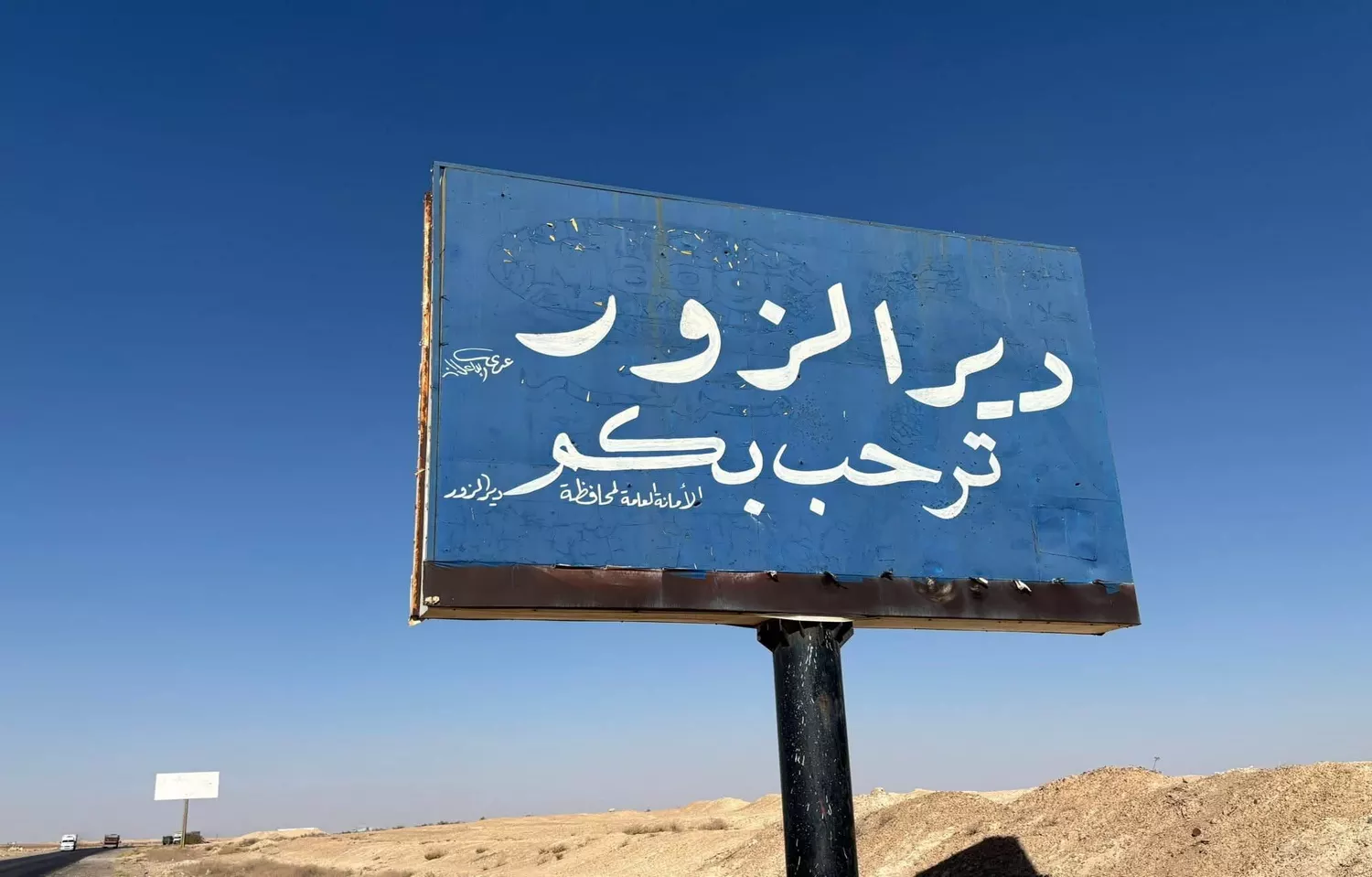
Public frustration is reportedly growing in Deir ez-Zor, as residents describe continued economic and service marginalization despite the governorate’s strategic importance and economic weight at the national level.
An Economic Hub Facing Mounting Pressures
Deir ez-Zor is considered a primary reservoir of wheat, oil, and gas. Its agricultural sector relies heavily on diesel fuel, particularly that produced by rudimentary local refineries, which for years served as a relatively affordable source of energy.
However, the decision to shut down these makeshift refineries on environmental grounds was accompanied—according to local observers—by an increase in the price of locally produced diesel from 4,000 to 8,000 Syrian pounds. Critics say no clear alternatives or compensation plans were offered to the thousands of families who depended on this risky trade, nor to farmers now burdened by rising production costs.
Security Concerns and Rising Crime
Residents also report an increase in armed robbery, kidnappings, and general lawlessness, raising concerns about public safety and the effectiveness of security enforcement.
The Damascus–Tadmur Road: A Continuing Hazard
Complaints are mounting over the international highway linking Deir ez-Zor to Tadmur (Palmyra) and onward to Damascus. Although classified as a major highway, drivers say it lacks basic safety standards, including proper lighting, a central divider, and clear lane markings.
Some stretches reportedly narrow to the point where two large vehicles can barely pass safely, contributing to multiple bus collisions since the fall of the previous regime—accidents that have claimed dozens of lives, according to local accounts.
A Central Role in Early Events
In 2011, many areas across Deir ez-Zor witnessed significant mobilization. Local sources state that leadership figures from the Front were based in the village of Gharibah in the countryside of Deir ez-Zor before the area was subjected to an intense military campaign that lasted throughout the night.
Following those events, leadership reportedly relocated to the town of al-Shuhayl and later moved to Idlib. Residents recall these developments as part of a complex political and security history in which Deir ez-Zor played a central role.
Between Potential and Reality
Today, many residents question whether the governorate is receiving attention proportional to its economic significance and historical role, especially amid rising prices, declining services, and ongoing infrastructure challenges.
Calls continue for concrete governmental steps to address security, infrastructure, and economic hardships, and to translate Deir ez-Zor’s strategic importance into tangible improvements in daily life.